
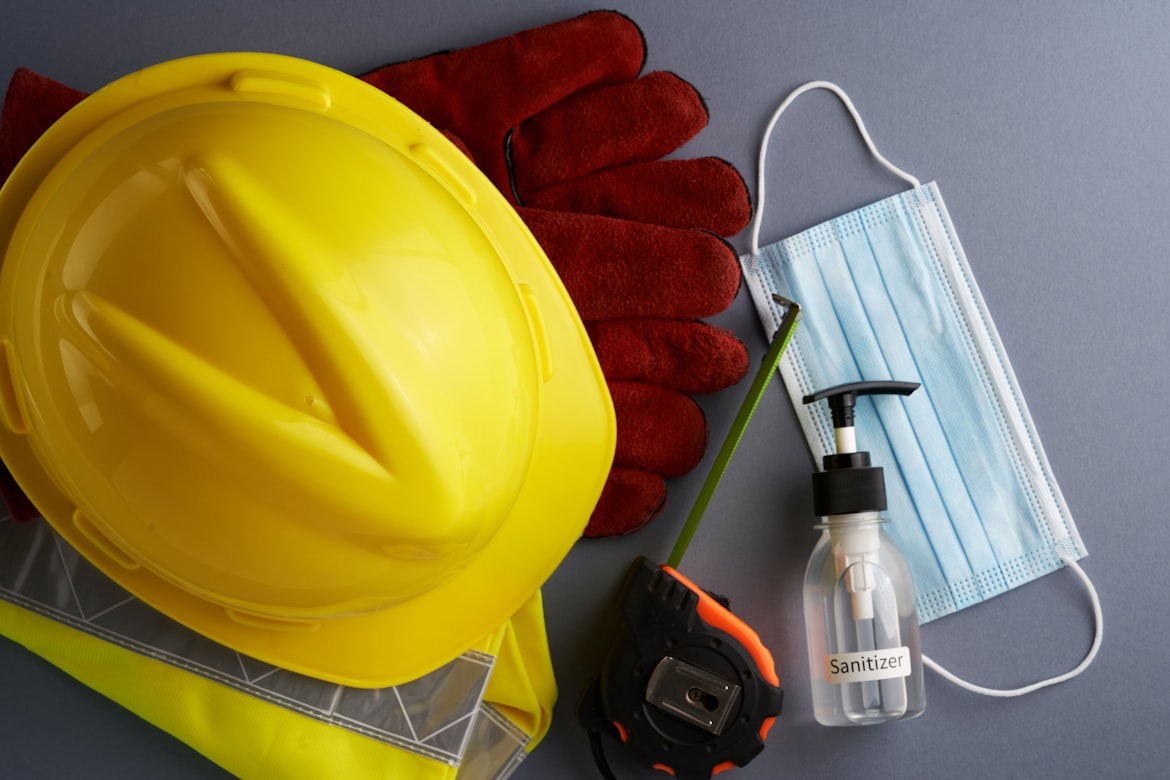
Occupational hygiene is about understanding how workplace exposures affect people over time and managing those risks before they cause harm. Our occupational hygiene services focus on identifying, measuring, and controlling health hazards in a practical way that suits real workplaces, not just regulatory theory. We work across a range of industries to assess exposure to physical and chemical hazards, including noise, airborne contaminants, fumes, dust, heat, and vibration. Our approach is evidence-based and aligned with Australian exposure standards and regulator guidance, while remaining flexible enough to reflect how work is actually carried out on site.
Excessive workplace noise isn’t just annoying over time; it can also permanently damage hearing and make it harder to hear instructions and alarms. Un...
Indoor and task‑based air quality influences worker comfort, safety and long‑term health. We assess airborne contaminants (gases, vapours and particul...
From fabrication to demolition, dust is present every day, and the respirable fraction is what reaches deep into the lungs. Exposure to inhalable and...
Welding fumes are a complex mix of fine particles and gases; in 2017, IARC classified all welding fumes as a Group 1 carcinogen. Australia’s WES for w...
DPM is a component of diesel exhaust made of ultrafine carbonaceous particles carrying PAHs, linked to lung cancer and other health impacts. WA mining...
LEV systems are designed to capture airborne contaminants at their source, but they only work effectively when airflow rates and capture velocities ar...
Managing hazardous chemicals requires a systematic approach to storage, handling and emergency preparedness. What we do: • Our audit service reviews c...
RCS is generated when cutting, grinding or polishing silica‑containing materials (e.g., concrete, stone). Australia’s WES is 0.05 mg/m³ (8‑hr TWA). Th...
Developing a health and hygiene management plan ensures that occupational hygiene risks are systematically addressed. This service involves conducting...
Respirator and hearing protection fit testing ensures workers are genuinely protected from airborne hazards and harmful noise exposure, rather than relying on assumptions about PPE performance. Under AS/NZS 1715, respirator fit testing is mandatory for anyone using tight-fitting disposable or reusable respirators. We provide both qualitative and quantitative fit testing for half-face, full-face and PAPR respirators, supported by pre-screening, donning training, and clear guidance on facial hair requirements. Using advanced particle-counting devices, we measure real-time fit factors to confirm that each worker receives an effective, secure seal. We also offer hearing protection fit testing to determine each worker’s Personal Attenuation Rating (PAR), ensuring earplugs or earmuffs provide the required in-ear protection during actual use. Our service includes technique coaching, PPE selection support, and retesting triggers such as weight changes or dental work. Every test is documented, and workers receive compliant fit test records, updated procedures, and practical toolbox materials to help crews use their equipment correctly on every shift.
Under AS/NZS 1715, fit testing is mandatory when workers use disposable or reusable tight-fitting respirators. We deliver qualitative fit testing (hal...
Hearing protector fit testing quantifies the Personal Attenuation Rating (PAR) for individual workers, proving the earplugs/earmuffs deliver the requi...
Effective ergonomics reduces strain, prevents injuries and supports sustained productivity by ensuring workplaces are designed to fit the people who use them. Our ergonomic services cover indoor lighting assessments, thermal stress evaluation and practical adjustments that directly improve worker comfort and safety. We assess lighting performance— including illuminance, uniformity and glare—against AS/NZS 1680.1 and provide recommendations for luminaires, task lighting, shielding and maintenance to prevent performance deterioration over time. For heat and cold stress, we evaluate environmental conditions such as temperature, humidity, radiant heat and metabolic demands using indices like WBGT and TWL to establish safe work-rest schedules. The result is a tailored plan that addresses the real conditions your workers face, with clear corrective actions, maintenance schedules, and training materials that help supervisors keep controls consistent across all shifts.
Good lighting improves visibility, accuracy, safety and productivity. Poor lighting can lead to eye strain, headaches and neck or back pain, and incre...
Working in extreme temperatures can cause heat stress or cold stress. controls must consider climate, workload, clothing and acclimatisation. We asses...
HAV arises from tools like grinders, drills and jackhammers and can lead to hand‑arm vibration syndrome (HAVS) and other MSDs. We measure and assess e...
Hazardous manual tasks include lifting, pushing/pulling, sustained awkward postures, repetition, and vibration, and they can cause musculoskeletal dis...
Have a question or planning a project? Contact our team for expert guidance and reliable support.